

Ben Was Right
QC and analytical labs are facing heightened expectations as method lifecycle principles, data integrity, and digital lab tools reshape the regulatory landscape. This article (with a good deal of help from new technology AI) highlights the most impactful changes for 2026, from method robustness to stability trending and risk-based monitoring. Exploring insights on modernizing programs to minimize variability, improve oversight, and strengthen compliance is a worthy pursuit.
In 1758, Benjamin Franklin said, “Keep thy shop and thy shop will keep thee”. Two hundred and sixty eight years later, it’s still great GMP advice. Somehow, despite our awareness and best intentions, the stresses of life and the pace of business distract us from what time and obsolescence do to our equipment, technology and processes. A check into recent FDA 483 citations reveal the results of those distractions.
Method lifecycle principles gaining regulatory traction
Method lifecycle-related FDA 483 observations frequently stem from inadequate validation, poor change control, and failure to maintain analytical methods. Key violations include insufficient system suitability, incomplete transfer studies, lack of ongoing monitoring, and poor investigation of discrepancies. Key focus areas are in development, validation, and transfer.1
Challenging our Method-related practices is a timely and risk reduction activity that could save a project or keep it on time. USP Chapter1220 and ICH Q14 address Method Lifecycle Management (MLCM); a three-stage, science-based approach—Design/Development, Performance Qualification, and Continued Verification—that ensures analytical methods remain fit for their intended purpose, from development to retirement. Key principles focus on risk management, knowledge management, and continuous improvement, often utilizing Analytical Quality by Design (AQbD).2
Stability challenges frequently flagged in inspections
Based on recent FDA inspection data, Warning Letters, and Form 483 observations, medical product stability challenges frequently focus on inadequate, unscientific, or non-existent programs to support expiration dates. Key areas of concern often involve failures in testing, documentation, and environmental.
Top Stability Challenges Flagged in FDA Inspections3
Inadequate or Non-Existent Stability Studies (21 CFR 211.166): A frequent, top finding is the lack of a written, scientifically sound, and validated stability testing program. This includes not testing at sufficient intervals or skipping required testing points.
Inappropriate Testing Methods: Using in-house methods that lack scientific justification, or not using established USP methods for monitoring active ingredient identity, assay, or degradation products.
Failed Specifications for Impurities/Degradation: Failure of drug products to meet specifications for degradation products and impurities throughout their shelf life.
Inadequate Stability Data for Expiration Dating: Failing to support the assigned expiration date with, or without, appropriate data, especially for new or specialized products like Cellular and Gene Therapies (CGTs).
Failure to Test All Product Strengths/Configurations: Not placing representative samples of all product strengths and sizes on the stability program, specifically failing to include those at the end of their shelf life.
Poor Environmental Controls: Inadequate controls, monitoring, and validation of stability chambers (e.g., temperature and humidity control).
Failed Retest/Stability of Raw Materials: Neglecting the stability of active pharmaceutical ingredients (APIs) before they are used in production, or failure to properly investigate out-of-specification (OOS) results.
Key Areas of Regulatory Scrutiny
Sterility Stability: For sterile products, failing to use container closure integrity (CCI) testing as part of the stability protocol to ensure it remains intact over time.
Compounding Pharmacies: Deficiencies in stability data for compounded products, particularly concerning the extension of beyond-use dates (BUD).
Combination Products: Inadequate stability studies that do not account for the interaction between the drug/biological component and the device component.
Data Integrity: Inadequate documentation of stability data, including missing, deleted, or manipulated electronic records.
Emerging Concerns
Shipment Validation: Lack of data showing that products remain stable through distribution and shipping, a critical concern for cold chain products.
In-Use Stability: Failure to validate the stability of a product after the container is opened.
As of 2025, the FDA is focusing on these areas in overseas inspections (particularly in India and China) and with OTC manufacturers, driven by a desire to prevent contamination and ensure product efficacy.
How digital tools support trending and data integrity
Digital tools revolutionize medical product stability trending and data integrity by replacing labor-intensive, error-prone, paper-based processes with automated, compliant, and centralized digital platforms. These technologies—including Electronic Laboratory Information Management Systems (LIMS), Stability Management Software, and Artificial Intelligence (AI)—ensure data accuracy (ALCOA+ principles), streamline regulatory compliance (21 CFR Part 11, GAMP 5), and enable proactive, real-time tracking of product quality over its shelf life.4
Best practices for managing method variability
ICH Q14 manages analytical method variability through a science- and risk-based approach, integrating Analytical Quality by Design (AQbD) principles to ensure robustness throughout the lifecycle. Key methods include defining an Analytical Target Profile (ATP), using Knowledge Management and Risk Assessment, Experimental Design (DoE), establishing a Design Space, and implementing System Suitability Tests (SSTs).5
Approaches to method transfer and verification
Method transfer and verification are regulatory-driven processes ensuring that analytical methods, once validated, perform reliably and consistently when moved to a new laboratory or, in the case of compendial methods, when implemented for the first time. Transfer verifies equivalence between a sending and receiving lab, while verification confirms a method works under specific, new laboratory conditions. Method verification defined:
Establishing documented evidence which provides a high degree of assurance that a specific process will consistently produce a product meeting its predetermined specifications and quality attributes. – U.S. FDA
ComplianceOnLine has a great article and associated seminar on this topic: Getting the Analytical Method Validation, Verification and Transfer Right
Analytical method transfer is the documented process that qualifies a laboratory (receiving laboratory) to use an analytical method that originated in another laboratory (transferring laboratory), whether that is internal or external to the receiving laboratory.
And is required whenever a validated method moves from one laboratory to another—for example, from R&D to QC, from a sponsor to a CRO, or between manufacturing sites. The goal is to ensure the receiving lab can perform the method with equivalent accuracy and precision. Regulators expect documented evidence of successful transfer. – USP
See the ComplianceOnLine materials for the types of method transfer and the performance analytics that should be challenged.6
Method verification is synonymous with single-laboratory validation. It is conducted when a laboratory uses a method for the first time or when a particular aspect of a method or its implementation is changed. Examples include when there is a new analyst, new equipment or equipment part, new batch of reagent, changes in the laboratory configuration, etc.
The minimum verification is to analyze the material prior to and after the change to check the standard method for consistency of results in terms of mean and standard deviation prior to its first use in a laboratory. Tests should include Bias recovery, Precision, Measurement uncertainty, Calibration model and Limit of detection (LOD).
Emerging expectations for documentation and traceability
Documentation and traceability of medical product stability data require a rigorous, GMP-compliant system—often managed via LIMS—that tracks environmental conditions (temperature, humidity), testing protocols, raw data, and analytical results from R&D through to commercialization. Data must be secure, searchable, and audit-ready to support shelf-life, storage conditions, and regulatory filings. Components of a Traceable System include:
Unique Identifiers: Usage of Lot/Batch numbers to connect raw materials, production, and final stability testing.
Audit Trails: Electronic systems must feature secure data logging, digital signatures, and a complete, unalterable history of interactions.
Documentation Lifecycle: Systematic creation, review, approval, and storage of records to ensure they remain accessible.
In addition, ICH guidelines such as ICH Q10 (Pharmaceutical Quality System), mandate that all formal data be accurately recorded, attributable, legible, contemporaneous, original, and accurate (ALCOA) to ensure safety and data integrity. Key requirements include maintaining detailed source documents, implementing controlled, authorized, and retrievable records, using electronic systems, and applying rigorous change management.
Risk-based sampling and stability strategy optimization
Risk-based sampling and stability strategy optimization focus on concentrating resources where failure is most likely or most impactful. By moving away from rigid, time-based intervals toward science-driven models, organizations can reduce costs, shorten timelines, and improve product safety.
Reduced Protocol Design
Leveraging product knowledge (e.g., ICH Q12 principles) to justify reduced testing frequencies and analytical tests, particularly for post-approval changes or well-understood product lines.
Risk-Based Sampling (RBS) Optimization
Rather than inspecting every lot or item equally, RBS uses data to prioritize high-risk areas.
Probability-Based Allocation: Adjusts sample size and frequency based on the probability of detection. For example, in food safety, sampling capacity is often distributed proportional to the potential disease burden (e.g., DALYs) of a product.
Adaptive Sampling: Employs stochastic algorithms to update sample sizes on-the-fly based on real-time data, which is highly effective for risk-averse stochastic optimization.
Targeted Surveillance: Uses spatial or temporal simulation models to identify “high-risk” locations or timeframes where pests or pathogens are most likely to enter or spread.
Stability Strategy Optimization
In the pharmaceutical and biotech sectors, “Lean Stability” and Risk-Based Predictive Stability (RBPS) are used to accelerate shelf-life estimations.
Accelerated Stability Assessment Program (ASAP): A widely used tool that employs modified Arrhenius equations to predict degradation under high temperature and humidity. It can provide stability insights in weeks that would normally take years.
Isoconversion Paradigms: Setting stability chamber conditions to reach a critical degradation level rather than just a fixed time point, allowing for faster drug substance and product shelf-life predictions.
Strategies for reducing investigation workload7
To reduce investigation workloads in laboratory and stability testing environments, organizations must shift from reactive “firefighting” to proactive, data-driven systems such as:
Digital tools to eliminate manual data entry and streamline investigation triggers.
A LIMS to automate result transfers from instruments, reducing human error and the need for transcription-related investigations.
Real-time environmental monitoring for temperature and humidity to prevent stability failures caused by equipment fluctuations.
Leverage AI to identify data anomalies early, allowing for minor adjustments before they escalate into full-scale investigations.
Identify “non-value-added” steps that often lead to errors.
Standardize protocols to reduce variability between analysts, which is a leading cause of “out of specification” results.
Plan repetitive tasks on set days, ensuring workload is stable and predictable.
Focus on the pre-analytical phase (ex. barcoding and proper sample transport) where the majority of laboratory errors occur.
Managing the volume of work is as critical as managing the process.
Reduce Unnecessary Testing: Implement Electronic Medical Record (EMR) changes to block repetitive or low-value testing orders, which can reduce lab volume by up to 25%.
Use data-driven tools to schedule staff based on peak workload trends rather than constant overtime, preventing the fatigue that leads to investigative errors.
Shift from reactive to proactive equipment maintenance to avoid unplanned downtime and subsequent “rush” workloads.
Adopt continuous study designs for stability experiments to better evaluate sample stability and reduce the frequency of redundant testing. *8
Specialized software can automatically calculate results and flag trends, reducing the manual review burden on stability managers.
Conclusion
Time and tide wait for no man (or woman). The time is now for a strategic evaluation and appropriate upgrades of your laboratory and stability program’s facilities, equipment and procedures to maintain the “c”(urrent) in your cGMP. A wealth of information and resources are available to accomplish the task. Take action before regulatory and business consequences arise.
References
- GMP Journal 07.11.2023 FDA 483s and Warning Letters concerning Stability Testing https://www.gmp-journal.com/current-articles/details/fda-483s-and-warning-letters-concerning-stability-testing.html
- What is Method Lifecycle Management (MLCM)? Waters Corporation 2020 https://www.youtube.com/watch?v=y2x9I34MS9s&t=147s
- Expiration Dating and Stability Testing for Human Drug Products Inspection Technical Guides DEPT. OF HEALTH, EDUCATION, AND WELFARE PUBLIC HEALTH SERVICE FOOD AND DRUG ADMINISTRATION *ORA/ORO/DEIO/IB* Date: 10/18/85 Number: 41 https://www.fda.gov/inspections-compliance-enforcement-and-criminal-investigations/inspection-technical-guides/expiration-dating-and-stability-testing-human-drug-products
- Optimize Your Stability Statistics Program for Digitalization https://stabilityhub.com/2025/03/30/optimize-your-stability-statistics-program-for-digitalization-success/
- ICH Q14 HARMONISED GUIDELINE ANALYTICAL PROCEDURE DEVELOPMENT Final Version Adopted on 1 November 2023 https://database.ich.org/sites/default/files/ICH_Q14_Guideline_2023_1116.pdf
- Oxford Academic Journals Institute of Mathematics and its Applications IMA Journal of Numerical Analysis Volume 43, Issue 6 November 2023, Pages 3729–3765 Adaptive sampling strategies for risk-averse stochastic optimization with constraints Florian Beiser , Brendan Keith , Simon Urbainczyk , Barbara Wohlmuth https://academic.oup.com/imajna/article/43/6/3729/6991354
- Biosero Blog; How to improve laboratory turnaround time https://biosero.com/blog/how-to-improve-laboratory-turnaround-time/
- American Laboratory Posted: November 1, 2006 Use of a LIMS to Help Manage a Larger Workload With Reduced Staff Carolyn Vaughn https://www.americanlaboratory.com/914-Application-Notes/35742-Use-of-a-LIMS-to-Help-Manage-a-Larger-Workload-With-Reduced-Staff/
Share This Article with the Stability Community!
October 9, 2026
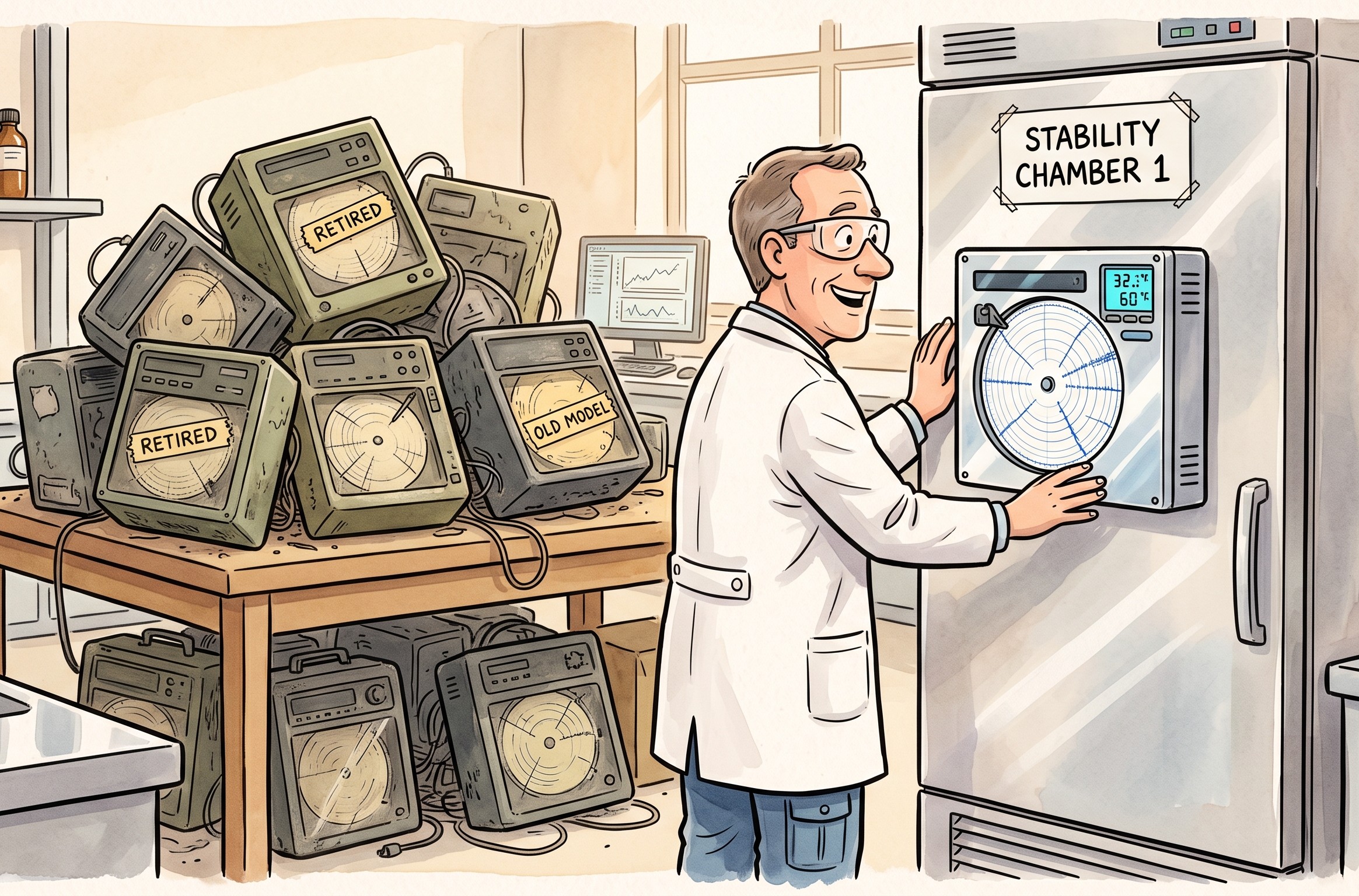
Let’s take a look at the evolution of environmental chamber monitoring systems. Are you fully evolved and up to date with the latest technology, [...]
October 9, 2026

The Japanese authority PMDA (Pharmaceutical and Medical Device Agency) which instituted a Warning Letter system in September 2025 has issued its first Warning Letter [...]
September 6, 2026
Quality Management is appropriate at all times in all settings, but Stability Operations is fraught with quality events at multiple levels, leaving the Stabilitarian [...]
Share your questions and experiences
A stabilitarian encounters new situations every day. StabilityHub’s discussion forums give Stabilitarians an opportunity to ask questions and offer solutions to specific scenarios. Join in the conversations with other Stabilitiarians and share your knowledge!
A stabilitarian encounters new situations every day. StabilityHub’s discussion forums give Stabilitarians an opportunity to ask questions and offer solutions to specific scenarios. Join in the conversations with other Stabilitiarians and share your knowledge!
